Fall 2026 Readings
October 25 – Mei-Mei Berssenbrugge
PLEASE NOTE: The date and time for this reading has changed to Sunday, October 25 at 3:00 p.m..
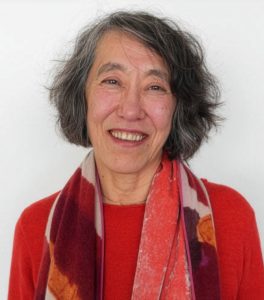 Winner of two American Book Awards and the 2026 recipient of the Frost Medal for distinguished lifetime achievement in poetry, Mei-mei Berssenbrugge is known for her hypnotic reading style and celebration of thoughtfulness and beauty. Yale University calls her work “A visionary ecopoetics that directly confronts our planetary—and human—crisis.” The author of 14 books of poetry, she has collaborated with artists across theater, dance, music, and the visual arts. Her work with composer George Lewis and The Crossing Choir won a Grammy in 2025. more info>>
November 15 – Edward Hirsch
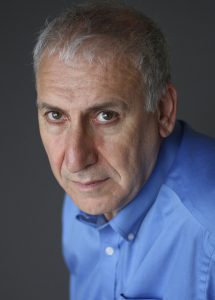 Edward Hirsch, a MacArthur Fellow, has published nine previous books of poetry, including The Living Fire: New and Selected Poems and Gabriel: A Poem, a book-length elegy for his son. He has also published seven books of prose, among them How to Read a Poem and Fall in Love with Poetry, a national bestseller, and 100 Poems to Break Your Heart. He has received numerous prizes, including the National Book Critics Circle Award. A longtime teacher, at Wayne State University and in the Creative Writing Program at the University of Houston, Hirsch is now president of the John Simon Guggenheim Memorial Foundation. He lives in Brooklyn. more info>>
Our Spring 2026 Readings
Suzanne Cleary – May 17, 2026
Read an Interview with Suzanne Cleary, conducted by Ann van Buren.
Reading poems ranging in subject from snakes to Sophia Loren, Suzanne Cleary described her ideal writing process as one in which her poems take leaps into new terrain.
“I love to be set in a particular place and then I want it to explode someplace I didn’t see coming,” Cleary said.
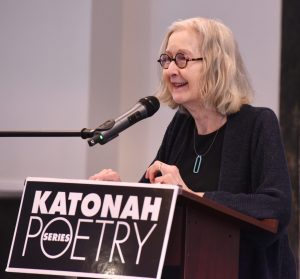
Cleary read for the Katonah Poetry Series on Sunday at the Katonah Village Library from her latest published book, The Odds, as well as from a new manuscript. The new work included a poem she had never read before, “Ode to Bad Dancers.”
In a lively Q&A following the reading, Cleary described the point when a poem becomes a poem as “starting when the subject feels larger than just itself,” she said. She added that when teaching she encourages her students to keep writing and let some parts to develop as notes for the poem, and some to become the poem itself. How to know when something makes the cut? Cleary looks for an element of surprise.
As for her own writing process, Cleary eschews a rigid daily writing schedule and said, “sitting down at my desk turns writing into a chore.” Instead, she jots down ideas on post-it-notes and scraps of paper, “because something got stuck in my mind,” she said. And when she is ready to write, she will look through her notes or use prompts for the purpose of loosening her up and cultivating an element of play, she said.
“It’s like being in a really good mood, but relaxed,” she said.
As for the reading itself, whose attendees included a poet she had dedicated one of her poems to, she said, “it is a great pleasure to read for you today and I’m going to savor every moment.”
Iain Haley Pollack – March 15, 2026
Read an Interview with Iain Haley Pollock, conducted by Ann van Buren.
At the Katonah Poetry Series gathering held on Sunday, March 15 at the Katonah Village Library, Iain Haley Pollock selected poems from his latest published book, All the Possible Bodies.
In a far-ranging reading that included poems that explored identity, race, and as Pollock described, the complexity of myth of country and myth of self, Pollock drew on images from Greek mythology as well as police violence, referencing the death of George Floyd at the hands of Minneapolis police and the present-day attacks by ICE, including the killing of Renee Good.
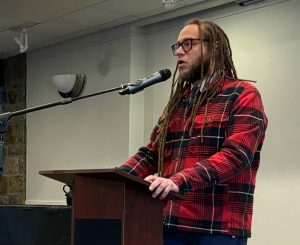
“I try not to be prescriptive,” Pollock says. “I think about poetry as a documentarian.” He included a reading of the poem, “Is You Is or Is You Ain’t?” which he said he rarely reads in part due to longer poems requiring him to, “to prepare people to strap in,” as he put it. He also read from what he noted was a group of bird-themed poems, including “Heron and Light at the Croton River” and described his realization while assembling his collection of poems of the need to “bring our whole selves to poetry,” adding that he wanted to bring in more joy before reading “Danse Printemps et Quarantine” of a girl dancing freely outdoors during covid’s beginning at a time when the world was mostly confined and isolated inside.
Pollock was a dynamic, engaged reader who joked with the audience about being “an evangelist of clapping between poems.” The audience queried Pollock about everything from where his language came from to how he deals with categorization. Regarding language, Pollock says he draws from books, both high and low-brow, music, but also a renewed appreciation of how we acquire language, after becoming a father seeing the very beginnings of where language comes from in watching his sons grow. He also noted a recent shift of his, from having long admired the natural rhymes of Spanish and coming to appreciate anew the American idiom and its ties to a diversity of linguistic sources from Latin to Native American. He called it, “a beautiful mix that is larger than romance languages,” adding that learning to harness it has “beautiful possibilities.” He described the sometimes unpredictable writing process, including when poems would come to him while commuting on Interstate 287 in New York to his teaching job at Rye Country Day School and finding himself, “saying the poem again and again to myself,” he said, so as not to forget as his brain was often, “trying to work out what is fraught and difficult.”
The garden room of the Katonah Village Library was full, with most attendees purchasing books at the reading from the local bookstore Booksy Galore, lining up to have them signed. (Booksy sold out all its copies of All the Possible Bodies that afternoon.) And over refreshments at the reception, audience members were effusive with praise, calling Pollock “great,” and volunteering how much they appreciated the reading.
Poetry at the Katonah Museum of Art
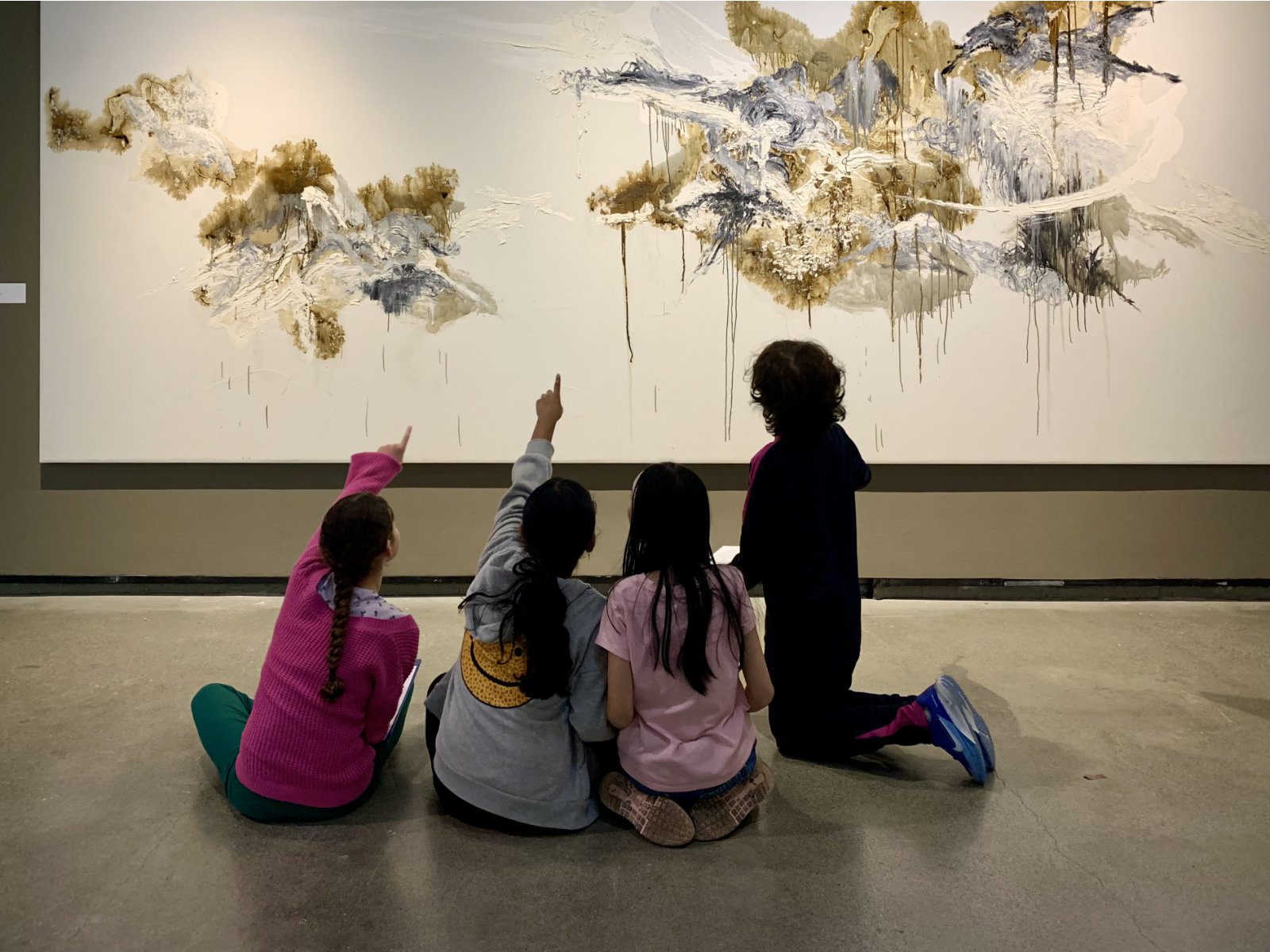 Don’t miss the moving collection of poems written by a group of men incarcerated at Sing Sing Correctional Facility now on view at the Katonah Museum of Art. It is part of a program, Words in Flow, run by the poet Pam Hart together with Rehabilitation Through the Arts and features ekphrastic poems inspired by the artwork of Shen Wei.
Hart, the writer in residence at KMA teaches and manages the museum’s Thinking Through The Arts program in schools and with the Building Bridges Prison Arts Initiative. She was struck by the “writers’ willingness to take risks and engage with the art works and various forms of poetry.”
The exhibition runs through May 24 and can also be viewed during KMA’s Art in Bloom program June 12 through 14.
Our Poet Interviews
Keep an eye out for our excellent in-depth interviews of the poets who read for us by Ann van Buren. Check out our archived Poet Interviews for fascinating insights into other KPS poets over the years.
Your beloved Katonah Poetry Series (KPS) is at risk. Covid-19 brought a significant decrease to audience size, program volunteerism, and the fundraising efforts needed to sustain this Series. You have the power to help save KPS. Your gift today will ensure that poetry remains an accessible art form in our community.
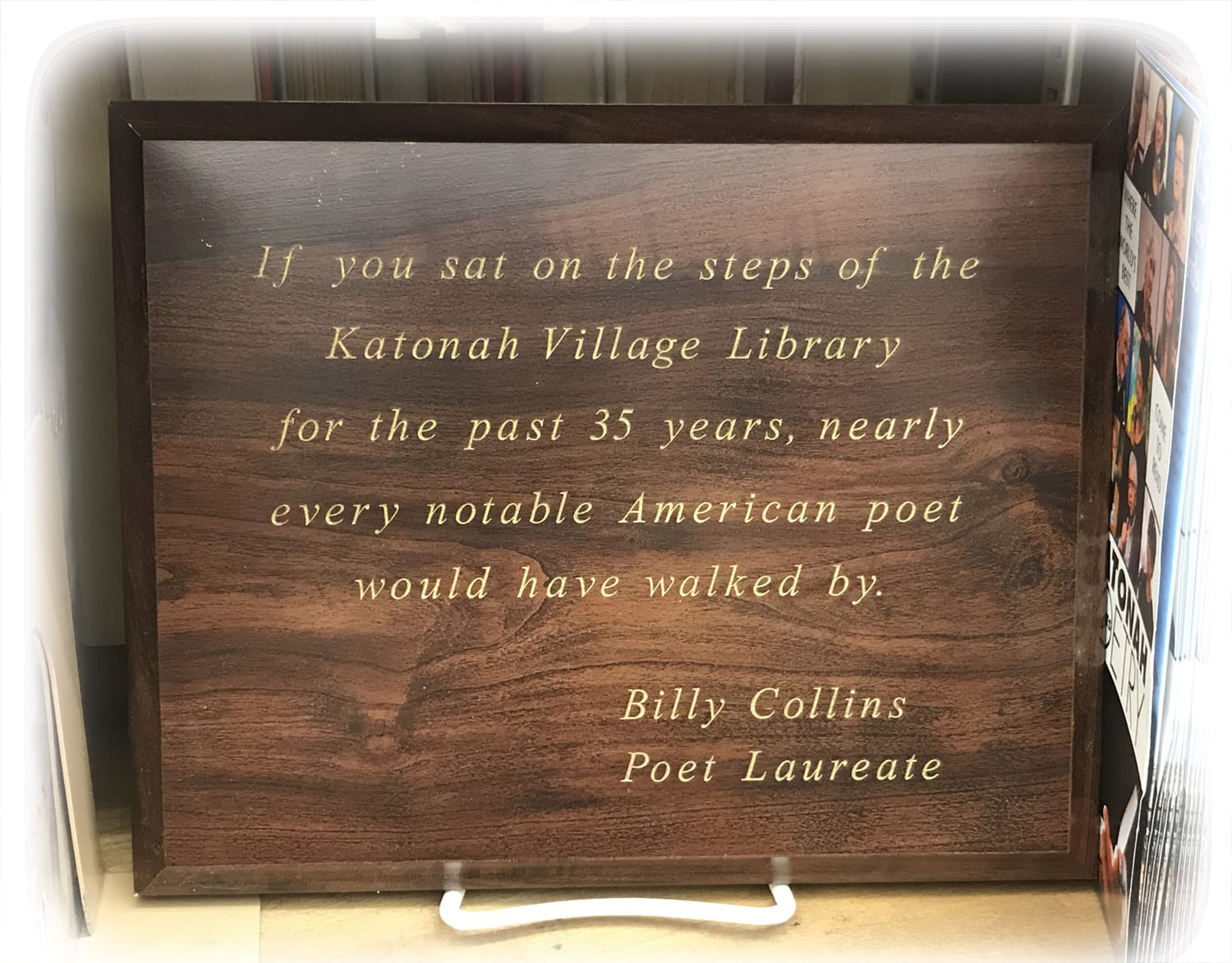
For over half a century, KPS has been a cultural institution. Founded by local poet Robert Phillips and continued with former Poet Laureate of the United States, Billy Collins, KPS has hosted the most accomplished poets in the world.
While KPS is a program of the Katonah Library, it is independently managed by dedicated volunteers, because expenses for hosting renowned poets exceed the library’s program budget.
KPS cannot continue without your gift today. Please act now to ensure the future of poetry. Make a gift today and attend KPS events. Help keep the beauty of poetry in Katonah.